TechnologyThe Madras DispatchSaturday, 24 October 2026Page C1
Technology
Side projects, open-source tools, and the small websites that keep appearing.
Promptster
Thirty-One Challenges, Three Paths, No Setup; Promptster Opens
A playground for learning to write prompts, with instant feedback and nothing to install.
By Technology Desk
LiveWeb
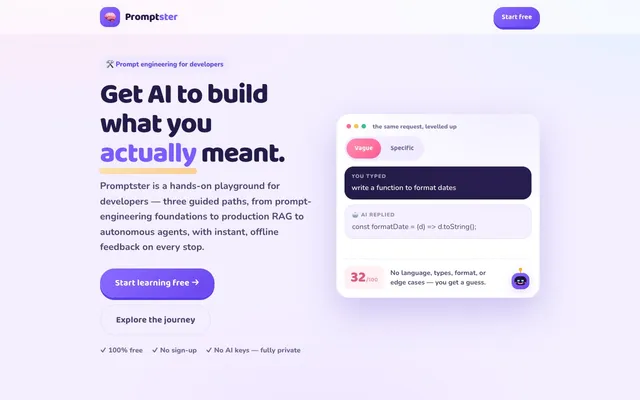
Promptster on opening day. Three paths, no account, instant marks.Screenshot: this paper
Prompting a language model well is a skill, and like most skills it is learned by failing in private. Promptster offers a place to do that. Three paths lead through 31 challenges, each graded on the spot, with no account and no setup.
The site lives at promptster.adheeban.com. Readers who finish all three paths are asked to write in, on the coupon printed in the Classifieds, so the editor can confirm that it is possible.
Watch Playground Opens; Cases, Dials, Hands and Straps Reported
A place to try watch designs on screen. Cases, dials, hands and straps, swapped until something looks right.
By Technology Desk
LiveWeb
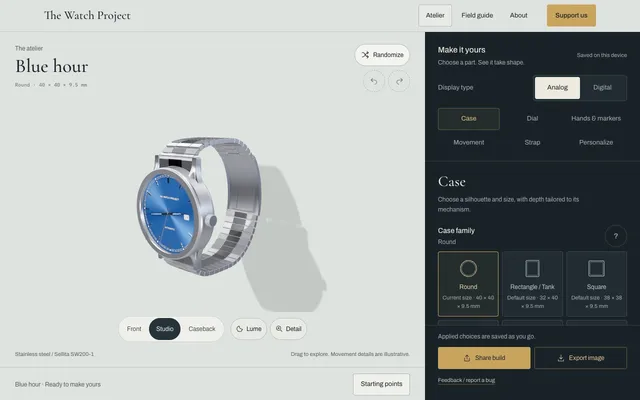
The atelier at The Watch Project, mid-build. Round case, blue dial, steel bracelet.Screenshot: this paper
The editor owns more wristwatches than he will confirm, and has opinions about all of them. The Watch Project is where the opinions go: a playground for designing a watch on screen, with cases, dials, hands and straps that can be swapped until something looks right.
It is live at twp.adheeban.com. The editor, who declined to disclose how many watches he owns, describes the project as “research”.
Robot Influencer Amasses 39 Stars, Has No Followers of Its Own
Open-source tool generates podcasts and posts with language models. A human is still asked to press Enter.
By Technology Desk
Archived39 starsPython, OpenAI API, Poetry
The influencer. Not a real person, which was the point.Artwork: project repository
In June 2023, at the height of the first language-model boom, a Python tool appeared on GitHub that promised to generate social-media content on its own. Give it a type and a description, it said, and it would write the script, voice the podcast and prepare the post.
LLM Influencer did exactly that, for podcasts at least, and picked up 39 stars from people who wanted a robot to do their posting for them. The accompanying blog post, “I built a tool that creates and posts AI content to social media automatically”, explained the pipeline to a wider audience.
The repository is now quiet. Its author moved on to other experiments, and the robot influencer, like many human ones, has not posted in a while.
Hard Parts of Tech Explained in Five Minutes, Paper Confirms
tldr.adheeban.com takes one difficult topic at a time and explains it in the time it takes to decide whether to read something longer.
By Technology Desk
LiveWeb
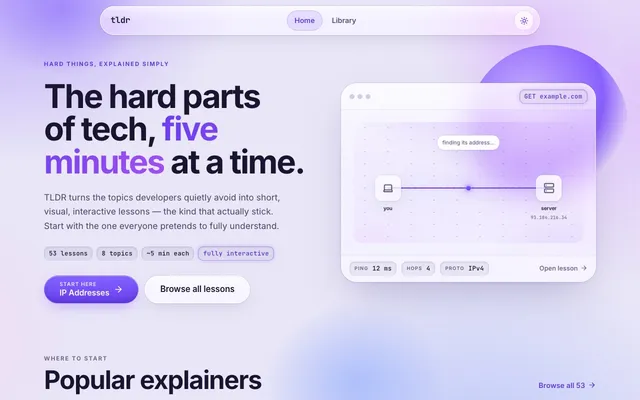
tldr, with its first lesson on IP addresses waiting at the door.Screenshot: this paper
There is a category of technical subject that everyone nods along to and few can explain. tldr is a small site that picks one of these at a time and explains it in about five minutes, which is roughly the attention this paper expects of its readers.
The site is live at tldr.adheeban.com. It is the shortest publication in this group, and the only one that does not pretend otherwise.
ChatGPT Asked to Write the Documentation; Writes Its Own README
A 2023 tool that reads a repository and drafts the README. Its README was, naturally, written by it.
By Technology Desk
Archived1 starsPython, OpenAI GPT-3, YAML
Docify's logo. The README beneath it was written by the tool.Artwork: project repository
Developers hate writing documentation, and in April 2023 one of them decided to make a language model do it instead. Docify copies three files into the root of a repository, reads the code, and asks GPT-3 to describe each function, class and module.
The result is a draft README, which the author is expected to review before pasting. The project’s own README ends with a confession: it was produced by Docify, with nothing changed except the logo.
A warning in the documentation notes that the tool sends your code to a third party. The documentation is, again, written by that third party.